Landfall

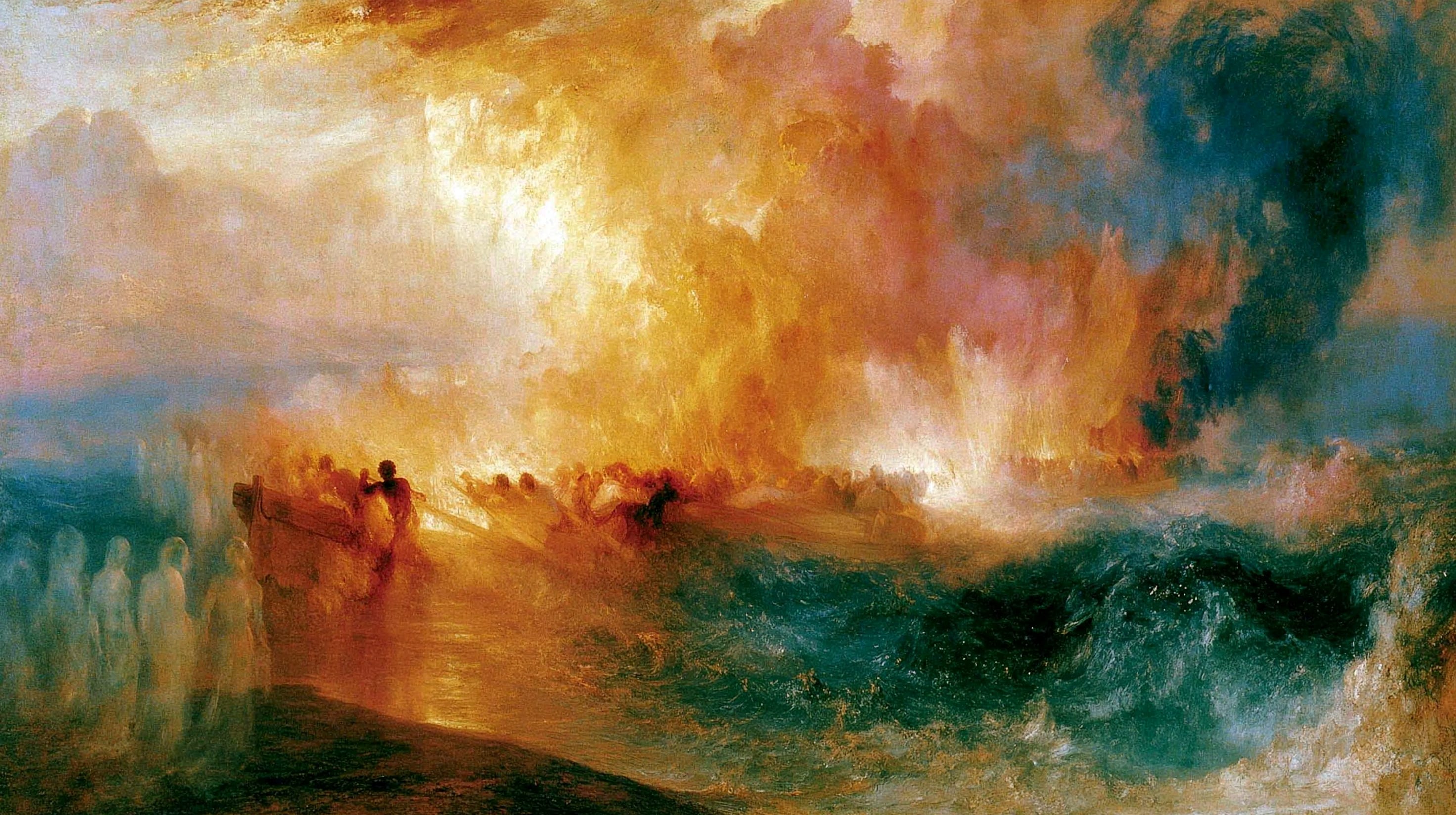
On the dark horizon, the sea is an impossible war: wood and bone burning in the throat of the deep.
The boats bleed fire, ringed by the water that will swallow them. Against the heavy, unfeeling hand of wind and wave, there is only the machinery of human muscle. The men row not just to reach the sand, but to outrun the clock of their own ash. Beneath their boots, the timber hisses and blisters, giving way to the heat, yet they throw their entire weight against the oars. Every stroke is a negotiation between cracking bone and rising tide. They are caught in a vise grip—trapped between the freezing chaos of the abyss below and the hungry, devouring rage of the flame above.
To hesitate is to burn. To slip is to drown. So they bend their backs, painting the black swells with the red, desperate glow of their own destruction.
And there, on the cold, wet sand of the shore, the ghosts stand waiting.
They do not reach out to help. They do not weep. They only watch, their quiet, hollow laughter carrying over the surf—amused by the familiar agony. In the eyes of the shades, the struggle is already over. The rowers, caught in that blistering, freezing purgatory of effort, are no longer entirely of the living.
They are like us. Alive and dead at the same time.
The shore was never the point.